

We got him to the city shelter where he got some proper meals and veterinary care. He’s been adopted by some lucky person somewhere.
Happy ending ❤️
We got him to the city shelter where he got some proper meals and veterinary care. He’s been adopted by some lucky person somewhere.
Happy ending ❤️
I have these dreams:
— to create little eco-village artist retreat in the mountains of New Mexico
— to produce my play
— to finish my play
— to make a living selling my stories
— to produce audio books, and… and…
They form delicate little glass balls filled with hyper-detailed scenes of my desire.
These little ornaments get packed safely away in the dusty attic of my mind, since they’re always in the way when I’m trying to get the laundry done or do the exercise required to keep the body in working order or grocery shopping or—
So they collect there in the mind’s attic, and sometimes they give off the eerie glow of night lights, guiding the way to the toilet from the bedroom at 4AM.
But sometimes they sprout spikes, and like a pile of puffer fish they roll down the stairs into the conscious living room of my mind and the sheer number of these desires, their incompleteness, the years they have patiently waited for a break in the laundry and the sadness and the errands overwhelms the space.
One or two poke into each other, oozing. Their spikes prickle me, and I take in the leaking poison until I develop a sepsis of wishes.
The rushing demands of the world are relentless. The egos of small men demand an economy in which we all live as bonded serfs in their AI panopticon, unable to rest for fear of unreasonably rising rent or medical bills or car bills or —
Some days I feel all I can do is tread sewage ‘till I drown or my blood turns against me, poisoned by my own unrealizable dreams.
I’ve got to run to work, but I am a little bit proud of myself for finishing a thing.
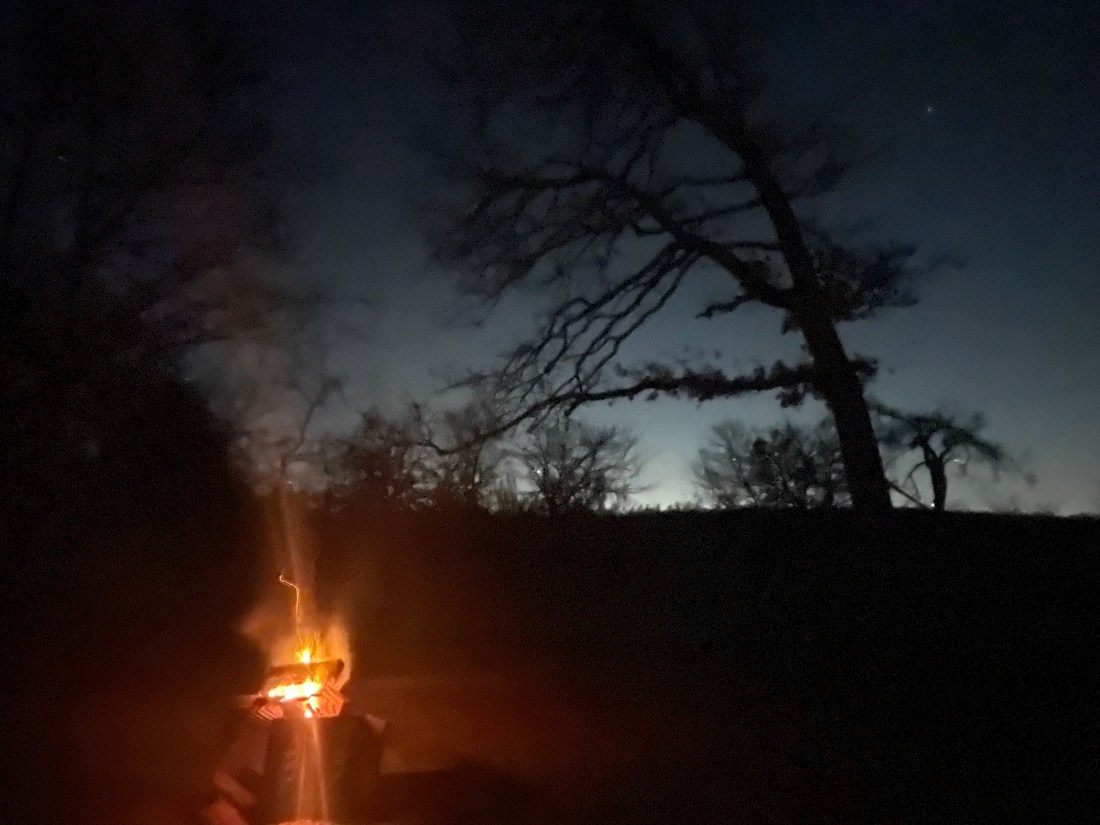
Disjointed, joined thoughts:
I read Julia Cameron’s The Artist’s Way last year, and ever since, I’ve been chewing on the idea that all art we produce is an offering to the gods and spirits.
Another idea that’s been rolling around in the slipstream of this grey matter is Gustav Mahler’s famous assertion that “tradition is not worshipping ashes, but tending the fire.”
In Taiwan, most of the Taoist temples have a stage attached. People gather in the courtyard to watch divine theatre, holy puppet shows.
I’ve also deleted all my social media and have been spending a lot of time writing longhand, using a 100-year-old typewriter, and making music on a Dobro from 1972. It’s not hard for me to lean into this more analog existence; I grew up in the ‘80s and ‘90s.
I went to a Bread and Puppet performance this past fall; it was glorious.
I grew up doing theatre. Performing poetry. Open mic nights.
How Music Works by David Byrne made me think about the event of people, making music, in a room. It made me really consider the difference between recorded music and live music.
Perfection is flat and soulless. It’s reified. Unattainable. The art we make should be meaty. Sweaty.
It should have dirt under its nails.
Heathenry, animism, dirt-and-tree worship — this should definitely not be a reified thing. It must be meaty and sweaty and real. It must be in-person. We must join hands and pass cups.
I remember that crochet is impossible to replicate by machine, and that makes it special.
I have been sewing my clothes, making my jewelry. I look more and more like a piece of my own art.
I want to stitch all these ideas together. Some kind of coherent artist’s statement. But coherency still eludes me.
That’s all right. I don’t have to be an essayist today. Tonight, by the new moon, maybe I can tend the flame as a poet.
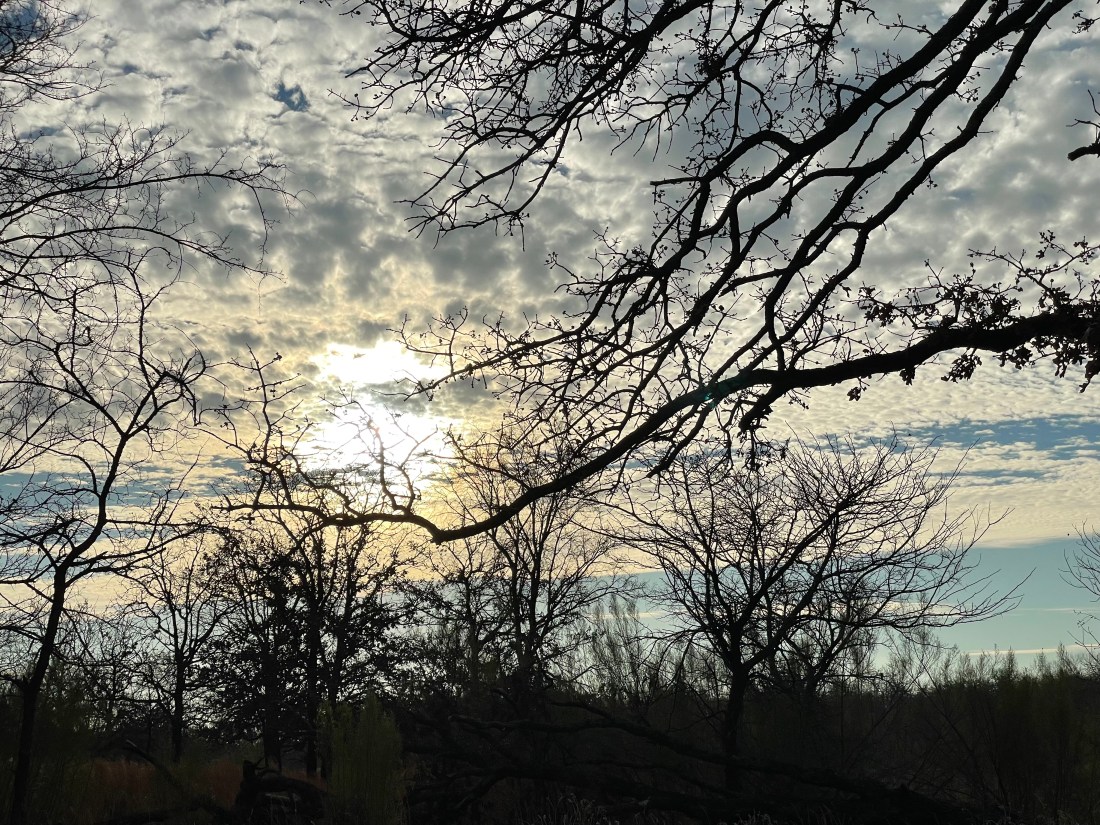
I recently recorded a podcast episode with a friend (details forthcoming) with the title “Everything is Made of God.”
The premise that we were working with is that if we approach the entire world as if it really were a part of God — a part of the original One Great Being — we are more likely to make choices about how we alter our environment that are less destructive. My argument is essentially this: if the narrative that we’ve grown up with is that Ymir’s hair (stick with me for a second if you’re unfamiliar with Norse creation myths) really became the trees of the Earth, and that the gods Odin, Hoenir, and Lodurr, (or Odin, Villi, and Ve) shaped the trees into the first man and woman, then not only are the trees and forests our ancestors and worthy of veneration, all mankind is your beloved sibling — there is no room for notions of “illegal aliens” or hierarchies of skin tone if we are all descendants of Ask and Embla — and all the material world is shaped of Ymir’s divine body.
It doesn’t matter that it’s obviously scientifically silly to say that the clouds are a dead giant’s brains or the sea is Ymir’s blood. It doesn’t matter if it’s a “true” story in the sense that saying two hydrogen atoms and one oxygen atom make up a water molecule is objectively true. The Ymir myth is a narrative that, I argue, equips us with a worldview that promotes decision making that is healthier, more equitable, more likely to defuse conflict, more likely to produce systems that work for humans and other animals and plants, fungi and all the other living beings of the planet.
So, the brief story of Ymir drawn from the poetic and prose Eddas runs like this: Primordial Fire and Primordial Ice meet up in The Big Empty, and the primordial giant, Ymir, is formed. From his sweat arises more beings. Some of these, the gods, essentially hack up Ymir to make Earth — who is herself conceived of as a conscious and willful goddess, Jord. Ymir’s bones and flesh become mountains, rocks, and soil, his blood is the sea, his hair is the trees, his brains make the clouds, his skull is the vault of the sky and so on.
One of the things we had to contest with (in my conversation for this podcast) is the idea of “double vision” — or, more likely, “fractal vision.” We may see the world on a spiritual level one way, but on a scientific or political level, we may see things differently.
The crux of “double vision” runs like this: just because I recognize someone as a beloved sibling who is making terrible choices as a result of crushing anxiety doesn’t mean that I’m not going to punch that someone if they’re trying to assault or kidnap my neighbor.
Just because I recognize the underlying unity of all people, (and beasts, and trees) doesn’t mean that anyone gets a pass on starving kids (or anyone else) for political aims. Genocide is genocide.
Nazi is as Nazi does, and we do not tolerate Nazis in this house; that’s how you wind up with your tattoos as lampshades.
So, if I’m coming at the world with a very pantheistic, animistic, hippie perspective, how do I deal with the obvious presence of evil in the world?
In short, bodies get sick. That is natural. We have to deal with sickness appropriately.
Here’s how I see it: human beings are deeply anxious little animals. We’re scared that we’re not good enough. We’re scared of death. We’re scared that our friends will reject us, that we won’t find love, that our loved ones will leave. We’re anxious about winter and we’re anxious about the rain, we’re anxious that the crops won’t produce enough and we’re worried that the animals are sick or the hunting won’t go well or that the baby will die or mother will die in childbirth. All these are legitimate fears. But at core, we are tense, vulnerable little creatures with a strong — overpowering — desire to feel that we are in control.
Our bid for control can go in essentially one of two directions. We can develop distress tolerance, be OK with the fact that everything is not OK, exercise our own agency to improve relations with the other people and beings around us by improving our own mental health, or we can seek power over others. We can approach the world as though “I” were the only subject, all else is dead “objects” to be used, discarded, or dominated, and generally act like a prick, Nazi, tyrant, authoritarian rancid shoe.
We all have anxiety. We can deal with it by developing agency to manage our own minds and relationships. We can deal with it by developing power over others and generally ignoring the growing pit of sorrow in our own hearts and substituting various toxic mimics of camaraderie for real relationships.
Those are our choices. How we deal with the sickness of anxiety is ultimately a choice. How we deal with sickness in the body politic is also a choice.
So imagine for a moment. A kid who should have been diagnosed with dyslexia, or given support for a reading comprehension disability. Rather than compassion and kindness, rather than being encouraged to do all the things that kid is certainly good at, the kid is given distain and impatience. The kid internalizes all that negativity. His anxiety that he’s not good enough, that he’s worthless, that may become depression or rage. He may turn self-hatred into any number of forms of egoism; the sentiment that “I’m better than them” — whoever they are — is always insecurity masquerading as superiority.
Think about the sort of people you have seen declaring that “whites” are “the superior race.” There are often visible signs that this person is not all right. How can we help that person heal from their delusions and begin to deal with their natural anxiety in a healthier way? Can we help them heal? (Or is our only option to endure the shitstorm and start fresh in a post-apocalyptic hellscape with aggressively animistic stories that inoculate the next generation from identitarian dumbfuckery and promote relational justice with all beings?)
And sometimes people are just evil. I know from my own firsthand experience that some sociopaths are just born that way. But most of our modern brownshirt cosplaying dweebs… they’re just looking for a way to feel a little better about themselves, and the only narrative they’ve been offered is power over, better than, domination.
So, double vision:
I really fucking hate Nazis.
I also really fucking believe that all beings are descended from Ymir, and that on a spiritual, biochemical, fundamental level, we are all interdependent and inextricable.
Double vision:
I can develop compassion for the dude who joins some backward bullshit federal agency because he’s broke and has no moral compass. That doesn’t mean I’m opposed to punching Nazis where needed.
And in response to either compassion or a solid right hook they’ll probably shoot me in the face.
And then I will return to the One Great Being — or maybe I’ll haunt that murderer’s ass with such a ferocity that he wishes he could exit stage left. And maybe my haunting ass ghost will make sure that self-hating, lonely, desperate, murderous douche canoe stays alive until he is ninety-fucking-nine years old, trapped in a decrepit body, unable to think about anything other than the mediocrity of his finest hour.
You never know.
In a living world made from the body of a dead god, you just never know.
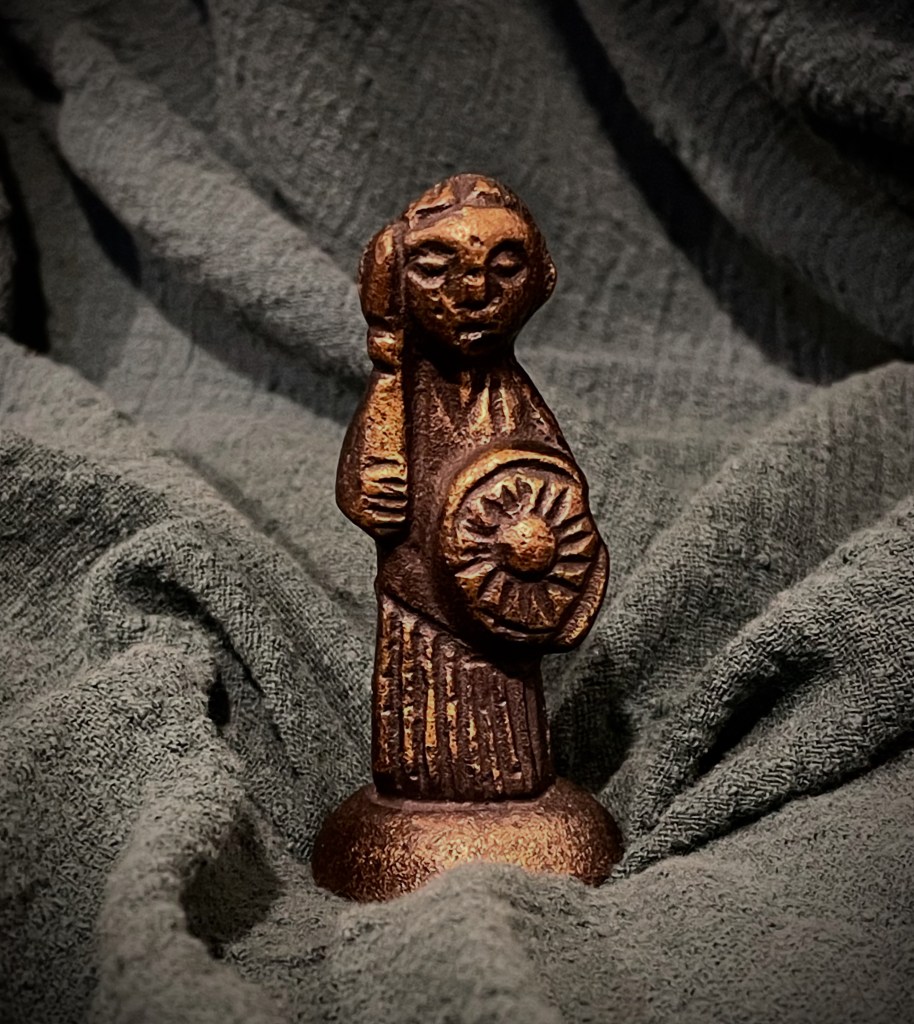
I marked April 18th on my calendar as Day of Resisters.
Why this day, particularly, I have since forgotten. (I forget a lot these days. I blame it on the firehose excess of information coming in, but it may just be that sometimes I work out a problem in my mind and then once I’ve arrived at a solution, forget all the steps that got me sorted in order to save precious “disk-space” in my aging mind.)
Nonetheless, today — today I will focus on one story of resistance: Lokasenna.
In this poem, Loki has gone to a feast of the Aesir to tell them off. Having said his piece, he is pursued by the angry gods and transforms himself into a fish, but is later caught in a net of his own design. In retaliation, his sons are killed and their entrails are used to bind him in a cave. A snake which drips poison is placed above him, and his wife, Sigyn, holds a bowl over his face to shield him. When she empties the bowl, Loki’s writhing causes the Earth to shake. Basically.
Now, I don’t think our myths ever need only one interpretation, nor do I imagine them to be literal tales of factual actions which occurred in the linear past. I think our myths are fractal metaphoric stories inspired in human poets by wise spirits, and that these stories endure because of the nearly limitless truths we can perceive in them as we turn them over, gazing into them through our own, changing, multifaceted contexts.
So, here is one interpretation of the Lokasenna.
Imagine that the gods here do not represent the good and kind and wise spirit powers. Imagine instead for a moment, that here they represent the delirious human grasping for absolute power. Capricious, ruthless, authoritarian power. Imperial, expansionist power.
The kind of power that arbitrarily kidnaps your three children from their mother in Ironwood.
Your children have committed no crime. Their transgressions are only supposed prophecies — unsubstantiated accusations. Potentialities. So the gods arbitrarily and capriciously toss one of your sons into the sea. They bind another son for a supposed eternity with an unbreakable bond and shove a sword in his open mouth. And they toss your daughter into the underworld — OK, she becomes goddess of said underworld, but still. Your three children have been kidnapped and renditioned to lands you cannot reach. You cannot rescue them.
Then you’re accused of orchestrating Balder’s death (only by Snorri, not by Saxo, but these rumors are clearly dangerous since no one is engaging in due process). Rather than disappearing into the humble, cowed night, you walk yourself directly into the gods’ party and you tell them off.
You use the shield of your old blood oath, your passport, to enter the space of power. You tell them off. And then, you have to flee, to hopefully fight another day, because now, Thor is after you. (Not Thor, protector of Midgard, not our friend, the god, not your longtime traveling companion, but here, a metaphoric representation of violent, irresistible, physical power.)
You slip away, but these authoritarians pursue you. You imagine all the ways they could catch you and you try to plan your various escapes, but in the end, they use your own mind — your own ideas — to snare you.
They imprison you. Tie you to a stone using the guts of your murdered child. Your partner does what she can. She tries to shield your face from the unceasing drops of venom — but sometimes she must empty the bowl.
And then, your writhing is the source of earthquakes. The injustice of your imprisonment and torture shakes the world.
The story doesn’t end there; authoritarians always sow the seeds of their own destruction. In torturing you and your family, they’ve created the enemies they sought to defeat. And you don’t survive, but you do end their rule.
I think this is one interpretation. I couldn’t really have seen it before now. But today, it feels like the most important interpretation.
Today, it feels like prophecy.

I do a lot of scribble-doodling while I’m sitting in a meeting (trying really hard not to tell off the man-child who’s interrupting the female presenter to tell us all about how she’s wrong and he has his fingers on the pulse of the One Right Way to teach… I failed, by the way), or while I’m avoiding some task or other. Sometimes the doodling is auditory… Weird, trance-ish, stuff. Usually layers and layers of tracks that accidentally include both 4/4 time and 3/4 time that smoosh up ok and wind up sounding like heart palpitations. I kinda like the auditory randomness that looks like my notebook doodles, but I don’t have anything really to do with it, ya know?
I remember listening to a podcast, I think it was Dharma Punx, but not Noah Levine — anyway, the other guy, the one from New York who hasn’t been accused of sexual misconduct (as far as I know, anyway). So, listening to podcast, right — and he said that people want to feel safe, seen, and soothed.
We want to feel safe. Not have our nervous systems constantly in fight or flight. Fair. So soothed. What’s that? He meant the ability to calm down, as I recall, and it starts with parents who validate and mirror our emotions, I think (the memory is OLD and recently dislodged) but to me, that sounds like what I mean when I say connected. We have people (or just others, generally, non-human people, whatever, but not just ourselves alone, doing solitary in the echo chamber of our own head, right?) and we know this little family is ride or die. If we’re feeling fucked up, we have an avenue back to safe. Back to calm.
Cool. So seen. Seen.
I’ve spent “half of my life / just tryin’ to fall behind” (thx Regina Specter), trying to melt into the floor, disappear into the background. But I like, I can’t. Anyone who knows me in person just choked on whatever they were eating/drinking when they read that I try to blend in and be beige because I am 100% a failure at remaining unseen. Well, un-caught.
See, I feel as though I am pierced through by the uncomprehending glare of others, not seen in the sense Dharma Punx dude was talking about (see what I did there? ROFL. snort. rolling my eyes at my own cringy self.)
What does it take to feel seen? I suppose it takes the courage to display one’s authentic self. No one can see and jive with what you’ve kept wrapped up in a cupboard under lock and key. But in the past, jeebus fekkin chucks on a string, accidental slippage of the mask has always elicited a smackdown.
The normies do not like me, yo. They do naaahhhhht.
But I’m fucking killing myself trying (and forever failing) to pretend that the inside of my head looks like a proper gray plastic office cubicle.
It doesn’t. It looks (and sounds) like that rando shit up there.
Hello, and welcome to Ducks of the World Tree, the podcast that waddles across the manicured lawns of suburbia, flaps wildly in front of a speeding Tesla, and dives deep into the tepid waters of some kind of pompous drainage ditch masquerading as a natural water feature.
In today’s tales of neurodivergent, animist wanderings through end stage capitalism, we’re talking about grief, isolation, and profit, with a side quest down health insurance lane.
The first premise that I’m always working with is that there are no individuals — only fluid and interdependent communities.
The communal nature of our innermost being may be invisible to many modern people, and I assert that’s an intentional part of capitalism. Isolated people are vulnerable and thus easy to control. They’re also more likely to spend money on crap they don’t need to soothe the souls-deep injury of disconnection. In order to destroy the bonds of healthy, interdependent communities, modern people are intentionally isolated, both conceptually and physically. We’re isolated by the idea that there is a human and non-human sphere as well as various identitarian notions about who we do and don’t have relations with. Physically, we’re walled off in climate-controlled apartments, we work from home, we order groceries to be delivered online, and packages from Amazon appear neatly at the door. But all of this does, indeed, depend on others. Conceptually, we’re in constant dialogue with everything and everyone who has gone before. Physically, we depend on the land and sun and rain to feed us, human beings to pick and package and transport that food, we depend on computers and their networks, which are made by groups of people and large amounts of supposedly “inanimate” “resources.” Even in our isolation we depend on vast networks of other-than-self.
And we, in turn, must serve our part in the larger machine by going to work.
The glue holding this fractured, depressed, delivery-dependent society together, however, is not love or clan or religion or land-connectedness — it is money. Exploitation, violence or the threat of violence, profit. There is a real, alienating, socio-pathology that underpins the social fabric of modernity and that is unsustainable.
It also makes us sad. We are sad because we know that we are interdependent, community-hungry little hairless apes and we know we are weirdly isolated by all the trappings of modernity, and we believe all this to be inevitable — and it makes us sad. We grieve for the loss of connection. We grieve the lack of relation.
…
I’ve also asserted that Nature is alive, conscious, sentient, animate, intelligent, and willful. That the natural world reaches out to us. It longs for us to rejoin the communion of the living in relational awareness. As an aside: I hate to verbally cut “us” from “nature,” because it isn’t true; we are nature. But I think if I don’t overall clarity will be lost at this point, so go with me on this, acknowledging that it’s an imperfect articulation.
Nature also grieves humanity’s strange little detour down modernity lane.
That underlying belief leads me to assert that there are no inanimate resources lying about waiting to be exploited any more than there are women lying about asking to be raped or hospitalized people just wishing they could hurry up and die so that some CEO somewhere could buy a second yacht with their accumulated health insurance premiums. There are only delusional humans exercising power via violence or the threat of violence over other sentient, living, intelligent beings.
And the deluded people are wrong.
The world is alive. It is conscious. And we depend on our connection to it for our health. The disconnection we suffer under capitalism leads inevitably to death.
We grieve. Nature grieves.
Not participating in the relational exchange of life on Earth drives us crazy and makes us sick. The attitudes that arise from seeing the world as a pile of inanimate resources underlies our entire system of exploitation, of violence, pollution, climate chaos… fucking health insurance. The entire idea that healthcare could be for-profit, the idea that a person who is sick is actually a resource for a corporation to exploit and profit from…
All that arises from the premise that the world is inanimate. That premise is the root of evil. The love of money comes afterwards.
Flip the coin for a moment: If our basic worldview were that stones and trees were alive and conscious, and we treated even stones and trees as non-human people with varying levels of consciousness and autonomy, how then could we conceive of exploiting other human beings? How could we conceive of exploiting women for their reproductive function or other groups of people for their labor? If we wouldn’t exploit a rock because it has a recognizable spirit, how could we exploit a human?
Our disconnection from the larger animate world ultimately allows capitalism to destroy the entire planet with pollution, plastic, carbon emissions, corruption, perverting our social bonds and basic humanity. And because we are atomized by capitalism, exhausted in our solitary, parallel lives, we are largely unable to adequately respond. So we grieve alone.
The last two premises that I’m always trying to work with are that reconnection is healing and that if the cure to your sadness is being sold to you, it is not the cure to your sadness.
If we want to be happy, we must reach out. Go outside. Cling to nature. Recognize that there is no separation between you and tree, bear and stone. See the flow of energy and matter through various states. Fall in love with the human and non-human worlds. Interact with the bark of trees, the cool, moist soil, the smell of fish in a lake, people in flesh. Not mediated by plastic and glass and silicone. And remember, that no one can sell you the medicine for what ails you. A toxic mimic of connection is worse than just suffering disconnection.
So, we must reconnect. One part of reconnecting with the real, animate, living world is engaging with grief. This engagement must be honest, fearless, and authentic — because the blithe, superficial, “it’s all in god’s plan” Hallmark cards bullshit undermines healing.
Grief is real and natural. Just like old age, sickness, and death, grief comes for us — all. But in this twilight of capitalism, we have sectioned off all the “unproductive” parts of human life. Sickness and death and age get sent away. And if someone is truly grieving, they’re of no use to capitalism.
Grief is the abject sorrow of separation. It is disintegration where there should be wholeness. Grief is too real, too authentic, too resistant to being subverted and used by capitalism. So we isolate the grieving. We isolate the sick who might make cause us to feel uneasy. We tell the sad that they need to take their problems to a professional. They need to take medication. So they can hurry up and get back to work.
As long as we are stuck in modernity, therapy and medication may well be necessary. But also, every piece of evidence we have about human beings experiencing grief and trauma and then truly healing from it, indicates that what we need physical community, dance, drums, touch, communion. Connection.
Today, in an effort to do some of the real work of grieving and healing and reconnecting myself, I would like to reach out to you, dear listener. I’d like to read a piece of prose poetry I wrote a few years ago about watching a beloved friend’s spouse die of cancer.
As I watched the 29 year old husband of one of my dearest friends die, horrifically, the spectre of the American health insurance system was an ever-present additional torture. The for-profit health insurance system was a vicious backdrop to everything else vicious and horrific that happened.
From the fact that he wasn’t diagnosed with cancer at all until it had spread everywhere because — well, because of insurance, to the fact that this fully insured, fully employed young couple also spent over $100,000 cash in a vain attempt to treat this cancer, all of it. All of the suffering. Every moment of it was monetized.
And that makes me extremely angry.
In the piece I am about to read, I only brush the topic obliquely. The financial aspect was far too much additional horror to dive into in this one poem.
But I want to say here and now, that for-profit health insurance is an absolute evil. The push for private equity to purchase hospitals and doctors’ practices has only made healthcare more inaccessible, and more deadly. Use of AI in health insurance claim denial has only killed more people since this piece was written. Our grief and our rage as a society has only grown.
Each of us, in our isolated silos, have grieved the loss of loved ones who were tortured not only by disease, but also by insurance companies. We suffer from cancers caused in no small part by the pollution and tainted food that capitalism foists upon us all, and then they torture us a little more with insurance claim denials and malicious incompetence that amounts to harassment. Retroactive denials of prior authorizations. They defend their denials until long after our loved ones have died.
You know the rest.
So I will read to you a piece about grief. And about rage.
The grief we collectively experience is not only of the loss of a loved one. It is the grief of isolation. Of financial precarity. Of insurance torture. Of separation from community. Separation from a natural existence. Dependence on toxic systems. The grief of capitalism.
So I will read to you of all this and more. Because part of reconnecting and healing is expressing our sorrows. Sharing our pain. Recognizing that everything touches on everything else.
A Vocabulary of Grief
ANNO I
A is for absolutely stunning. You, my dear friend, could not have been a more beautiful bride, nor could the groom have been more dashing. The two of you, both twenty-something, immortalized in ten thousand photographs: you are the effortless, natural definition of grace and youth and health — absolutely perfect in every way.
ANNO II
B is for best. For going home to your kind, warm, fabulously brilliant best friend every night. For the best year ever. For your new floors and grown-up furniture and fancy new picture frames (some still sporting stock photos). For your new job. As your mom says: “It doesn’t get any better than this.” Everything is so good, your friends (maybe just a little bit jealously) are speculating whether next year, B might be for baby.
ANNO III
C is for chaos. Because families are for holidays. I mean, holidays are for families. Families, a time to sit together and eat too much. And play with the little cousins. Eat too much, but not until you get a stomachache, goober. But the stomachache has grown. In reality, it has lurked there for a long time, weeks, months, quiet, barely known, but now it is something more. Something that hurts. So you take your silly husband to the doctor, and he probably has appendicitis, which is urgent, but not really any big deal in the grand scheme of things. The doctor sends the two of you to the nearest emergency room where a heavy-set, blonde woman in too-tight, sea-green scrubs scans his guts. And mild irritation wraps awkwardly around your thin shoulders as you swing your feet from the too-tall chair in the too-cold room, scrolling mindlessly through your phone. And you wait and wait and wait. But the tightness in your chest is because fuck this is expensive, and no one has time for this on the Sunday night before you both go back to work from Thanksgiving break, not because even the tiniest hummingbird-shadow of fear has crossed your minds.
ANNO IV
D is for diagnosis. And then the doctor walks in, business-like and grim, and he says many things, but you hear only one clear word before the doctor turns away and closes the door on you: cancer.
ANNO V
And C is for chaos. For the order-less, justice-less dance of the universe and the traffic on the way to the hospital. For the spinny little particles of dust trapped in viscous ropes of sunlight as it passes through the window of the family room on the fourth floor of the cancer ward where you should not be, looking as though your heart is a dried-out, rotten apple that has collapsed in on itself, forgotten on the counter. Where he should not be, sitting there in a robe and a blue toboggan cap wearing his trademark lighthouse smile that almost masks the terror. Where I should not be, standing around like a bad impression of myself, offering oversized trays of chocolate candies you don’t really want making small talk with your mom and his cousins.
ANNO VI
F is for things fall apart.
ANNO VII
G is for gravity. The sensation that before this moment, the air was busy filling up, moment layered upon moment, with tiny grains of sand, but I had lived my life up to now unaware. And now I see that your body has gained the mass of a dying star, and all things fall toward your center. Now, the weight of terrible possibilities descend over all our minds like wet wool that expands to fill the volume of the chest, that twists inside the belly. It is the weight of my bones suddenly shot through with nails that squirm and worm their way up and down the long corridors of my arms and legs. Bones that would give their very marrow to flee, flee, flee — but that instead sit beside you as you sit beside him as we sit beside this strange new reality in the blue-carpeted family room on the fourth floor cancer ward.
ANNO VIII
I is for insurance. See also: Quasi-Satanic, uniquely American method of torture.
And I is for indignity. For every open-backed paper dress, cold tile on bare toes, samples of every possible bodily fluid lined up in clear plastic cups with blue screw-tops labeled with white stickers, his name and ID number and age scrawled across in black marker.
ANNO IX
P is for the paperwork that comes in official emails, that must be faxed, that arrives in envelopes large and small. Paperwork that collects, sheet after sheet, in reams stacked and filed and folded as if we were preparing the sacrifice of great swaths of forest to lay on the altar of bureaucracy in the slight hope that a capricious god would grant reprieve to your beloved.
ANNO X
O is for operation. And C is for chemo. And for a different chemo. And yet another. C is for claim. And D is for denial. S is for savings, all used up. P is for the passage of less than a year’s time that feels simultaneously like a moment and longer than a century.
ANNO XI
H is for hopeful, still. For the foolish, unutterable, tingling, sweaty, hot, swirling mess of maybe things will be OK after all.
ANNO XII
And S is for one last scan.
ANNO XIII
M is for metastasized. For the sickness that creeps along the shadow of the fence lines of our lives, dark vines seeking purchase in untended ground. Tendrils waiting to blossom in spectacular arrays of horror.
ANNO XIV
O is for the operation to make a little more space in his lungs. Just a little space. Just for a little while.
ANNO XV
F is for feeling like a force-fed tick. For holding all these things in my gut while I scurry the halls at work, trying to avoid the seeking eyes and prying questions of our co-workers. For feeling as though I have become insectoid and horrible, and that with every well-meaning query, my distended gray belly is tearing open to disgorge the purple morass of viscous churning news.
ANNO XVI
H is for hospital, again. And P is for pain. D is for the dread that rises from my belly, a clear, fine, sharp shape that spreads out in chrysanthemums of blue, electric shock along my collarbones and arms and palms and fingertips. And U is for unravelling.
ANNO XVII
J is for joy. Banal little snippets of sparkly, orange joy that shine through the cold, gray granite of this place. Mango Slushies. Bubble tea with popping bubbles. Watching him light up the room with that grin of his, bright as the only lighthouse on the coast, as he watches you shove Hot Cheetos into your face.
ANNO XVIII
T is for time, for the way that time collapses to a pinprick, and I look at all my living friends and see us simultaneously as we are now and as we inevitably will be. As he is now. For the way that time is running out.
ANNO XIX
R is for regret, whileL is for lost, life, longing. And for lingering. And N is for now. Because now divides never-will-be from was, and because now is all that’s real, despite our protestations.
ANNO XX
Q is for questions, the questions your other friends hurl at me because they’re terrified and they don’t want to bother you. The questions that pierce the fragile facade of I’m fine. The questions that come with jagged, slender, innocent edges. The questions that lodge in my belly and slice me open until I spew anguish across the room and the contents of my pathetic little heart paint the walls and desks and windows with my insufficiency and my fear.
ANNO XXI
E is for emotions. All of them. For the endless origami seascape of the human heart. The infinite possible contradictions. Because I felt all of them the day he waited until you had turned your attention to the nurse, and he took my hand in his and would not let go until I found his eyes. And I knew he knew. And you did not. Yet.
ANNO XXII
V is for vivisection, which is what I felt was happening when you told me what the doctor said that morning. Vivisection — for the cracks that seem to open in the body as a response to the heart’s pain. And for the light that shines through those ruptures. The light that shines from these fissures in who we used to be. The light that seeps, the light that pours, golden and broken. After that, X is for Xanax, which I think I may need because S is for screaming in my car in the parking lot at work. Because there is no more O for operation to buy time and no more C for chemo to buy time and no more T for time and
ANNO XXIII
Z is the sound of the buzzing in my head because
ANNO XXIV
H is for hospice, the word that transforms all possibilities and all hope and all love and all friendship into loitering corpses doped up on state-restricted painkillers.
ANNO XXV
K is for keening. For the songs we sang on the horizon of his deathbed. For your poetry of memory, time, tide. For the high wail of his stepmother in the bathroom. The soft raking of his father in the kitchen. For your mother and I, curled on opposite ends of the couch, trying to sob silently. For attempting to fold this grief into something tiny and quiet enough to tuck between the cushions of the couch because I cannot carry two sorrows, and there is time enough for me to care for my own later.
ANNO XXVI
Y is for yesterday, when I knew he would be dead by morning. When I went racing across the parking lot of my apartment, house slippers flapping, to stand in the graveyard next door and take photos of the dying of the day because I saw that the sun had almost set, and I was running out of time. And for the moment yesterday when I thought: I’ve missed the best of it, but no big deal, try again tomorrow. Then the thought: No, no. This sunset is marvelous and unique and alone, and the atmospheric conditions will never be just this way ever again.
Every day is marvelous and unique.
And we are always running out of time.
ANNO XXVII
Because D is for death,
ANNO XXVIII
And W is for widow, my dear friend.
ANNO XXIX
And A is for absolute. For the line between before and hereafter.
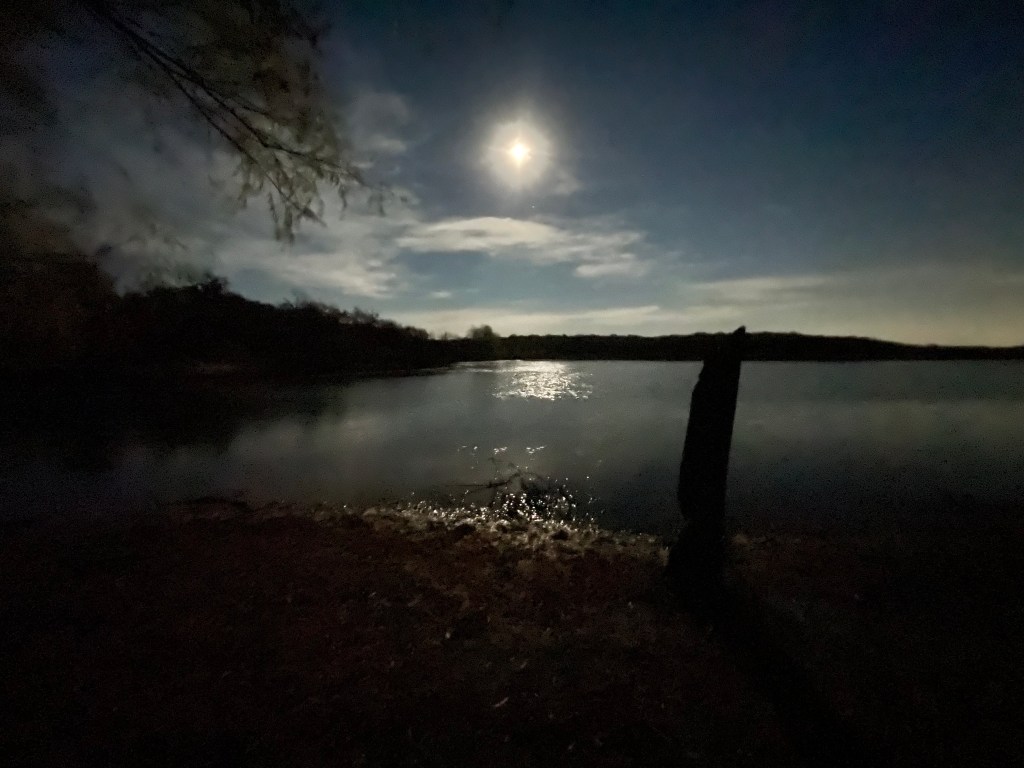
I’m still trying to get together that podcast episode on grief, isolation, capitalism, and health insurance, and I’m finding myself stuck in a familiar ADHD-paralysis-glitch. Which led me to write the following journal entry.
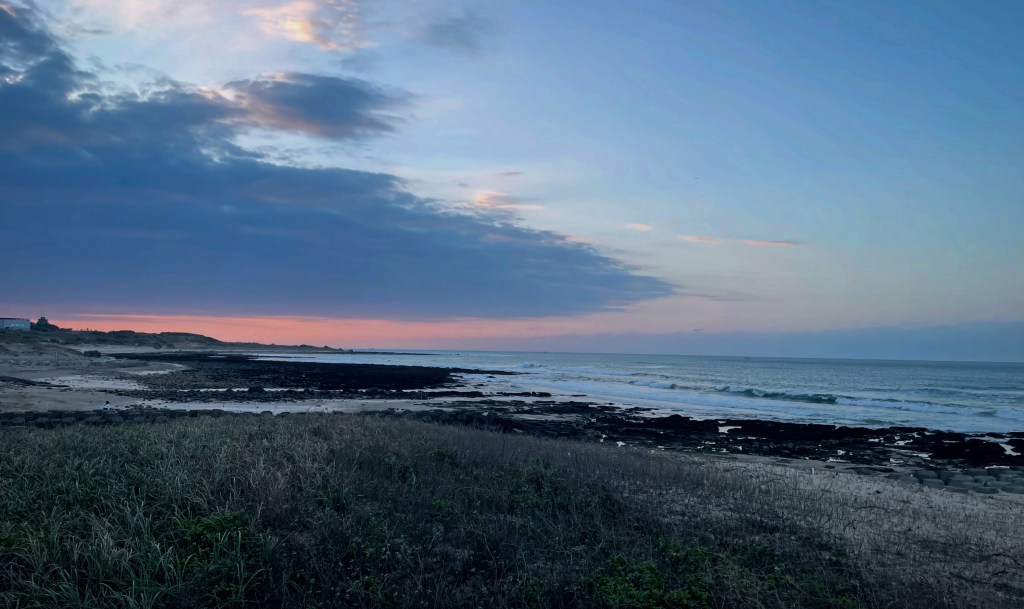
I want to be happy. I do not know how to walk toward that. Everything I do, I lose interest in within a fairly short amount of time — two to three months maxes out my sustained enjoyment of most things. And I cannot make myself do something if I don’t have that joyful drive, that dopaminergic power propelling my activity. I have no executive function myself, and I’m too broke to hire a CEO…
I cannot achieve true proficiency in anything because I cannot maintain focus long enough to progress beyond a superficial understanding. I am an incredible pancake. Although, that may be an insult to the depth of pancakes. Perhaps I’m more of a flimsy, roadside diner crepe?
I can create interesting first drafts of songs, catchy little snippets, fun turns of lyrical phrase, but cannot pursue music because I cannot focus on the nuts and bolts of music theory or recording or mixing or editing or developing any real musical skills because I get distracted; I lose interest. By the time my interest is reignited by the unseen and unknowable forces governing my brain, I forget what I had learned and wind up needing to review the basics. I cannot even settle on a primary instrument; I flit from piano to guitar to MIDI instruments in rapid succession, never really gaining mastery in anything.
I can create interesting draft ideas for novels and stories, but I cannot complete them. I cannot make myself focus to finish after the joy of the initial idea has fizzled out. My computer is a graveyard for would-be great American novels. I physically cannot make myself type out the words I know I would write. And I cannot understand this.
I can generate one or two paintings that get accepted into a gallery show… but then… I can’t find the focus to paint again for so long that my skills degenerate and I can’t remember how to sketch out an underpainting at all.
Now that I understand that my inherent, basic restlessness, my propensity to aimlessness in all things, and my inability to complete any task that cannot be done in one sustained moment of hyper-focus is all ADHD, at least I have a name to put to it all. At least I have a reason other than just the ramshackle cathedral of my own personality flaws. I truly cannot focus. Not in the moment. Not in the long run.
Medication is a bandaid on a cancerous tumor. It’s crutches, and I have no feet to speak of, only little pegs strapped to what should be my knees. Medication grants a few hours wherein my mind is not a crowded high school cafeteria, and I am able to accomplish some of the daily tasks that need doing: laundry, grocery shopping, sweeping. I can shower without it being a battle. I can go to work, because work is urgent. (It is boring, but it is urgent, especially when my visa depends on it.)
But brushing my teeth will never be an automatic habit. Doing yoga in the morning will never be consistent. Nothing will ever be a habit. Nothing will ever be easy or routine or done without intent. Everything will always be a task (a great series of tasks, in fact) which requires executive function I do not have and some degree of willpower to accomplish.
I am tired. I am tired of my brain racing around, brimming with creative possibilities and no ability to accomplish them. I am tired of seeing, of knowing. I am tired of thinking.
My brother asked me a while back what my “North Star” was — trying to help me get a handle on what I was doing. I said that it was to get to a place financially where I could have a little land, a little cabin in the woods, some chickens and ducks and a garden. Solar panels and rainwater collection and my bike.
And that is partially true. I’ve always held that as a dream, and in fits and spurts, worked toward it with things like a permaculture certificate, living on a subsistence farm in Belize, working on random people’s properties. But I also know that I will get bored. I will want something more. I think I will always come back to that… but what happens to the birds when I am off gallivanting because I absolutely had to get away? Well, OK, what’s my true “North Star” then? Maybe I want to “be” an artist (whatever that means)… but that requires skill and focused pursuit. And money. OK, I certainly enjoy traveling — particularly the sort of dirtbag travel that entails wandering around by loaded bicycle or through-hiking. But that requires money. That’s not a profession. And “content creator” is not a job I’m likely to pursue—I am, at heart, a Luddite. I hold a deep suspicion of technology. Besides, I’m so consistently inconsistent, who would join my Patreon? Who would put up with my irregular production schedule?
Everything requires money. And I have about the same level of skill with managing money as I do with managing time.
Which is to say, none at all. I am utterly time-blind. I do not experience the passage of time. Period. All my memories, spread across three continents and close to five decades all exist in an ephemeral not-now that is simultaneously a few minutes ago and aeons ago. I do not experience how long I’ve sat here typing. Or how long I’ve been back in Taiwan. I do not know how long it’s been since anything. I live in the eternal half-present, which is simultaneously pregnant and aged, just-born and long-buried.
Time and money are mysterious forces that seem to have inordinate power over my life, that I can neither comprehend nor control.
Much like focus. Or task switching. Or transitions from work to home. Or transitions of any activity.
I hate this.
I’m tired.
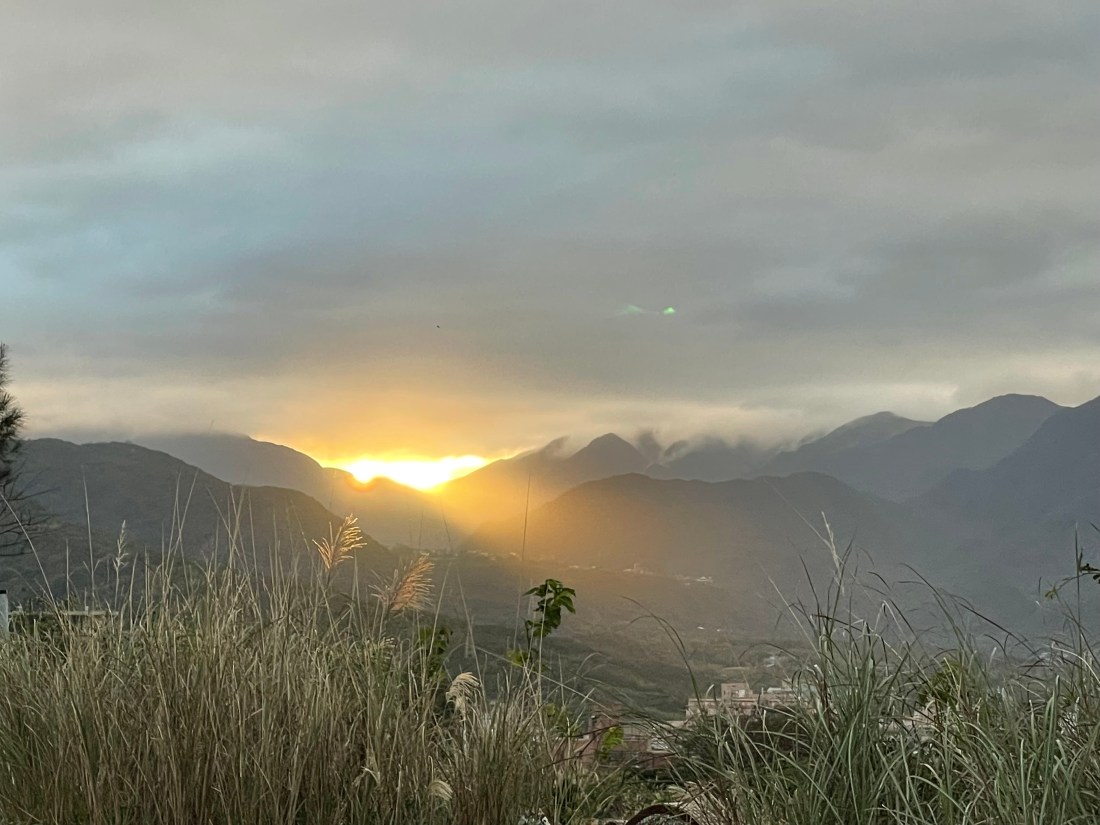
Hello, and welcome to Ducks of the World Tree, the podcast that waddles across the manicured lawns of suburbia, flaps wildly in front of a speeding Tesla, and dives deep into the tepid waters of some kind of pompous drainage ditch masquerading as a natural water feature.
In today’s tales of neurodivergent, animist wanderings through end stage capitalism, we’re talking about daydreaming, art, and the absurdity of modernity.
So, I moved back to Asia in September, and it’s taken me a lot longer than I anticipated to pull myself together to do anything creative. It’s December already, and the last three months have passed with the same kind of slipperiness and insubstantial *swoosh* as draining noodles and having half the pot escape down the Dispose-all.
This time-disconnection is pretty typical for the neuro-fancy tribe, but sometimes it hits me that huge chunks of life have slipped away and I’ve done nothing but work and watch trash TV and read and daydream.
This thought hit me: that it is SO MUCH MORE FUN to daydream than it is to just do the thing.
I can daydream all day about creating one-woman plays, I can make endless concept albums in my mind, build complex plots for novels that will never be written.
Daydreaming is so fun! — It’s just, I wonder… is it really? More fun? Than actually creating something? What’s going on? This seems… this seems particularly absurd.
Because I do experience joy after a day of actual writing or tinkering on a song. I do enjoy making things with yarn and paint and fabric.
But the days walking around the mountains, reading, daydreaming, making little watercolor notes in a cafe in downtown Taipei. THAT, that is the life.
Maybe capitalism’s emphasis on production is the problem. I mean, we all need time to just be. What would we even produce if we never had time to be still, be unproductive, read, think, meditate — right?
But I think my love of daydreaming is more of a maladaptive coping mechanism. If I explore enough, daydream enough, I don’t have to confront my own dislocation in space, time, or history. I won’t have to confront my own boredom.
Maybe I’m just pathologically restless and unfocused which, I suppose, should surprise no one considering the premise of the podcast is animist ADHD neurospice-ological musings on existence during end stage capitalism.
So anyhow, lately, my unproductive time has been spent reading David Byrne’s How Music Works, and that, coupled with a side quest down Joan Didion Lane, a quick jaunt down Camus’ dark alley, with a pit stop at the Cafe Nietzsche has me… daydreaming.
A lot.
David Byrne has me pondering What Art Is, what it can be, should be. What defines music? Is it the intangible experience of people making music in a room? Is it the recording, which is static, an object that can be bought, sold, possessed (to say nothing of the reality that we own nothing these days, what with the digital streaming services).
But is art a thing that can serve capitalism? Or is Art a holy communion that might save us from an ecocidal and self-destructive nihilism?
Could art for arts sake save us from the absurd death-cult that is modernity?
If the relentless march of totalitarian capitalism leaves our world increasingly disenchanted, materialized, and commodified; and then we are, as a result, increasingly bored, restless, rootless, aimless, and empty, is Art a way out? A way around? A way to be so radically free that your very existence is rebellion?
An answer, the right answer, to Camus’ “one truly serious philosophical problem.” The question of whether or not life is worth living.
Because yes, we are captives in a for-profit prison. Every aspect of natural existence is compelled into the service of profit. All needs are stolen from the natural world and sold back to us. We are denied even time to dream guilt-free.
Because yes, daydreaming for dopamine to survive a life stripped of meaning by a sociopathic and ecocidal drive for profit IS ABSURD.
Modernity IS ABSURD.
But so is giving in to this fascist regime of capital, saving the corporate healthcare scheme millions in profits by shuffling yourself off the ol’ mortal coil (since they won’t have to pay for you in your old age, right?). How dare these fuckers trap us so vilely, so thoroughly in meaningless machine existence.
The long you live, the more you feel like a lab rat, and the white-coat-lords-above keep shaking our cage so that we’re always off-balance. Always unsure.
But are we really unsure of what Art is?
No. I think not.
Somewhere deep within we know. So do they.
Art is communion. It is unmediated communication. Between our inner selves and the broader community of seen and unseen beings that make the animate, conscious fabric in which we are embedded. Art is reconnection with the world as an enchanted place. Art brings the gods and powers back into the body of the world. Art is healing.
And the true medicine that heals us from the absurdity of modernity can not be bought or sold. That’s why corporate “art” works so hard to convince you that you can’t make art. You can’t sing. You can’t dance. You can’t whatever as well as whatever professional whoo-ha. Crush the natural human drive to create with insecurity.
Failing that, they’ll let you have the tools, the computer, the method to self-publish, but then the rules change and no one can make a living doing art. No one can survive on that income alone, and you’re working two jobs to make rent, so who has the time anymore…
To do anything more…
Than daydream.
So let’s daydream a new world. And let’s steal time to write it. And let’s steal the space to share our ideas. And let’s just live outside of 24-hour clock time that was invented for the fucking factory system, and let us live outside of productivity and outside conventional notions of focus and just be.
Be human.
All too human.
After all.

