
I recently recorded a podcast episode with a friend (details forthcoming) with the title “Everything is Made of God.”
The premise that we were working with is that if we approach the entire world as if it really were a part of God — a part of the original One Great Being — we are more likely to make choices about how we alter our environment that are less destructive. My argument is essentially this: if the narrative that we’ve grown up with is that Ymir’s hair (stick with me for a second if you’re unfamiliar with Norse creation myths) really became the trees of the Earth, and that the gods Odin, Hoenir, and Lodurr, (or Odin, Villi, and Ve) shaped the trees into the first man and woman, then not only are the trees and forests our ancestors and worthy of veneration, all mankind is your beloved sibling — there is no room for notions of “illegal aliens” or hierarchies of skin tone if we are all descendants of Ask and Embla — and all the material world is shaped of Ymir’s divine body.
It doesn’t matter that it’s obviously scientifically silly to say that the clouds are a dead giant’s brains or the sea is Ymir’s blood. It doesn’t matter if it’s a “true” story in the sense that saying two hydrogen atoms and one oxygen atom make up a water molecule is objectively true. The Ymir myth is a narrative that, I argue, equips us with a worldview that promotes decision making that is healthier, more equitable, more likely to defuse conflict, more likely to produce systems that work for humans and other animals and plants, fungi and all the other living beings of the planet.
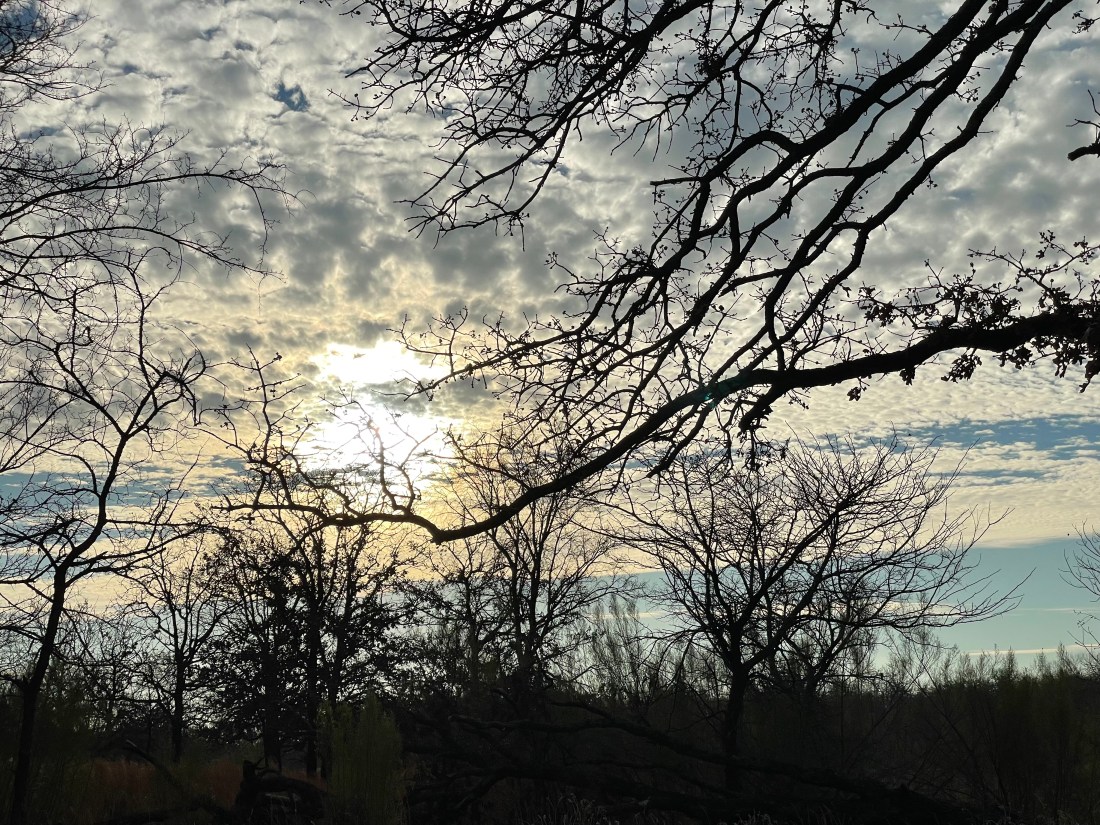
So, the brief story of Ymir drawn from the poetic and prose Eddas runs like this: Primordial Fire and Primordial Ice meet up in The Big Empty, and the primordial giant, Ymir, is formed. From his sweat arises more beings. Some of these, the gods, essentially hack up Ymir to make Earth — who is herself conceived of as a conscious and willful goddess, Jord. Ymir’s bones and flesh become mountains, rocks, and soil, his blood is the sea, his hair is the trees, his brains make the clouds, his skull is the vault of the sky and so on.
One of the things we had to contest with (in my conversation for this podcast) is the idea of “double vision” — or, more likely, “fractal vision.” We may see the world on a spiritual level one way, but on a scientific or political level, we may see things differently.
The crux of “double vision” runs like this: just because I recognize someone as a beloved sibling who is making terrible choices as a result of crushing anxiety doesn’t mean that I’m not going to punch that someone if they’re trying to assault or kidnap my neighbor.
Just because I recognize the underlying unity of all people, (and beasts, and trees) doesn’t mean that anyone gets a pass on starving kids (or anyone else) for political aims. Genocide is genocide.
Nazi is as Nazi does, and we do not tolerate Nazis in this house; that’s how you wind up with your tattoos as lampshades.
So, if I’m coming at the world with a very pantheistic, animistic, hippie perspective, how do I deal with the obvious presence of evil in the world?
In short, bodies get sick. That is natural. We have to deal with sickness appropriately.
Here’s how I see it: human beings are deeply anxious little animals. We’re scared that we’re not good enough. We’re scared of death. We’re scared that our friends will reject us, that we won’t find love, that our loved ones will leave. We’re anxious about winter and we’re anxious about the rain, we’re anxious that the crops won’t produce enough and we’re worried that the animals are sick or the hunting won’t go well or that the baby will die or mother will die in childbirth. All these are legitimate fears. But at core, we are tense, vulnerable little creatures with a strong — overpowering — desire to feel that we are in control.
Our bid for control can go in essentially one of two directions. We can develop distress tolerance, be OK with the fact that everything is not OK, exercise our own agency to improve relations with the other people and beings around us by improving our own mental health, or we can seek power over others. We can approach the world as though “I” were the only subject, all else is dead “objects” to be used, discarded, or dominated, and generally act like a prick, Nazi, tyrant, authoritarian rancid shoe.
We all have anxiety. We can deal with it by developing agency to manage our own minds and relationships. We can deal with it by developing power over others and generally ignoring the growing pit of sorrow in our own hearts and substituting various toxic mimics of camaraderie for real relationships.
Those are our choices. How we deal with the sickness of anxiety is ultimately a choice. How we deal with sickness in the body politic is also a choice.
So imagine for a moment. A kid who should have been diagnosed with dyslexia, or given support for a reading comprehension disability. Rather than compassion and kindness, rather than being encouraged to do all the things that kid is certainly good at, the kid is given distain and impatience. The kid internalizes all that negativity. His anxiety that he’s not good enough, that he’s worthless, that may become depression or rage. He may turn self-hatred into any number of forms of egoism; the sentiment that “I’m better than them” — whoever they are — is always insecurity masquerading as superiority.
Think about the sort of people you have seen declaring that “whites” are “the superior race.” There are often visible signs that this person is not all right. How can we help that person heal from their delusions and begin to deal with their natural anxiety in a healthier way? Can we help them heal? (Or is our only option to endure the shitstorm and start fresh in a post-apocalyptic hellscape with aggressively animistic stories that inoculate the next generation from identitarian dumbfuckery and promote relational justice with all beings?)
And sometimes people are just evil. I know from my own firsthand experience that some sociopaths are just born that way. But most of our modern brownshirt cosplaying dweebs… they’re just looking for a way to feel a little better about themselves, and the only narrative they’ve been offered is power over, better than, domination.
So, double vision:
I really fucking hate Nazis.
I also really fucking believe that all beings are descended from Ymir, and that on a spiritual, biochemical, fundamental level, we are all interdependent and inextricable.
Double vision:
I can develop compassion for the dude who joins some backward bullshit federal agency because he’s broke and has no moral compass. That doesn’t mean I’m opposed to punching Nazis where needed.
And in response to either compassion or a solid right hook they’ll probably shoot me in the face.
And then I will return to the One Great Being — or maybe I’ll haunt that murderer’s ass with such a ferocity that he wishes he could exit stage left. And maybe my haunting ass ghost will make sure that self-hating, lonely, desperate, murderous douche canoe stays alive until he is ninety-fucking-nine years old, trapped in a decrepit body, unable to think about anything other than the mediocrity of his finest hour.
You never know.
In a living world made from the body of a dead god, you just never know.
 Ducks of the World Tree