I do a lot of scribble-doodling while I’m sitting in a meeting (trying really hard not to tell off the man-child who’s interrupting the female presenter to tell us all about how she’s wrong and he has his fingers on the pulse of the One Right Way to teach… I failed, by the way), or while I’m avoiding some task or other. Sometimes the doodling is auditory… Weird, trance-ish, stuff. Usually layers and layers of tracks that accidentally include both 4/4 time and 3/4 time that smoosh up ok and wind up sounding like heart palpitations. I kinda like the auditory randomness that looks like my notebook doodles, but I don’t have anything really to do with it, ya know?
I remember listening to a podcast, I think it was Dharma Punx, but not Noah Levine — anyway, the other guy, the one from New York who hasn’t been accused of sexual misconduct (as far as I know, anyway). So, listening to podcast, right — and he said that people want to feel safe, seen, and soothed.
We want to feel safe. Not have our nervous systems constantly in fight or flight. Fair. So soothed. What’s that? He meant the ability to calm down, as I recall, and it starts with parents who validate and mirror our emotions, I think (the memory is OLD and recently dislodged) but to me, that sounds like what I mean when I say connected. We have people (or just others, generally, non-human people, whatever, but not just ourselves alone, doing solitary in the echo chamber of our own head, right?) and we know this little family is ride or die. If we’re feeling fucked up, we have an avenue back to safe. Back to calm.
Cool. So seen. Seen.
I’ve spent “half of my life / just tryin’ to fall behind” (thx Regina Specter), trying to melt into the floor, disappear into the background. But I like, I can’t. Anyone who knows me in person just choked on whatever they were eating/drinking when they read that I try to blend in and be beige because I am 100% a failure at remaining unseen. Well, un-caught.
See, I feel as though I am pierced through by the uncomprehending glare of others, not seen in the sense Dharma Punx dude was talking about (see what I did there? ROFL. snort. rolling my eyes at my own cringy self.)
What does it take to feel seen? I suppose it takes the courage to display one’s authentic self. No one can see and jive with what you’ve kept wrapped up in a cupboard under lock and key. But in the past, jeebus fekkin chucks on a string, accidental slippage of the mask has always elicited a smackdown.
The normies do not like me, yo. They do naaahhhhht.
But I’m fucking killing myself trying (and forever failing) to pretend that the inside of my head looks like a proper gray plastic office cubicle.
It doesn’t. It looks (and sounds) like that rando shit up there.
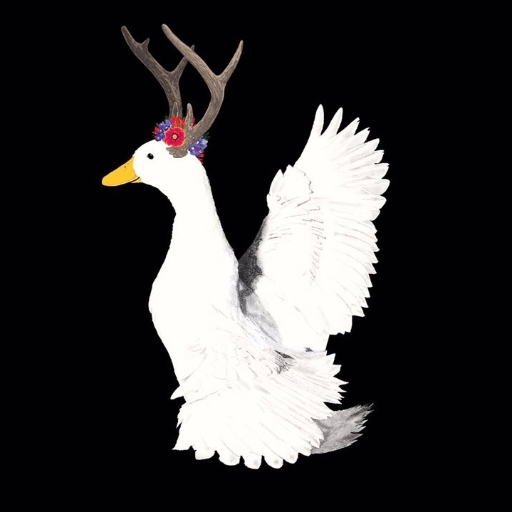
Hello, and welcome to Ducks of the World Tree, the podcast that waddles across the manicured lawns of suburbia, flaps wildly in front of a speeding Tesla, and dives deep into the tepid waters of some kind of pompous drainage ditch masquerading as a natural water feature.
In today’s tales of neurodivergent, animist wanderings through end stage capitalism, we’re talking about daydreaming, art, and the absurdity of modernity.
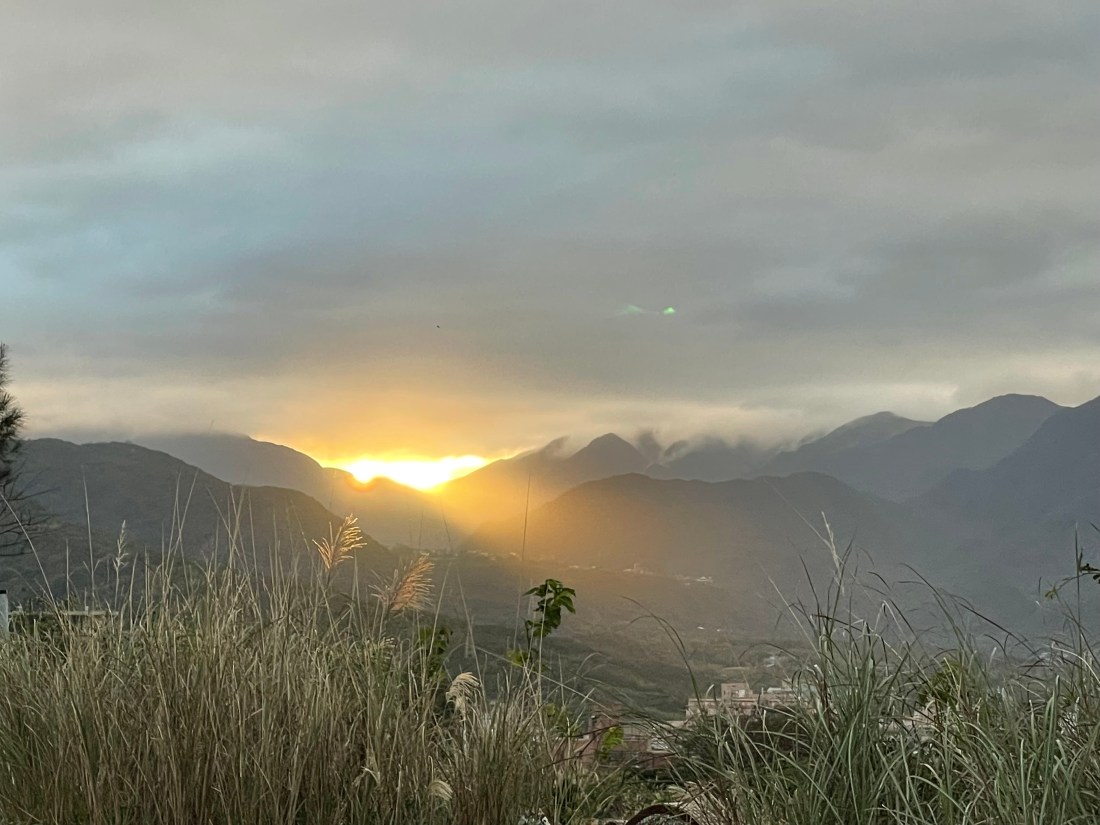
So, I moved back to Asia in September, and it’s taken me a lot longer than I anticipated to pull myself together to do anything creative. It’s December already, and the last three months have passed with the same kind of slipperiness and insubstantial *swoosh* as draining noodles and having half the pot escape down the Dispose-all.
This time-disconnection is pretty typical for the neuro-fancy tribe, but sometimes it hits me that huge chunks of life have slipped away and I’ve done nothing but work and watch trash TV and read and daydream.
This thought hit me: that it is SO MUCH MORE FUN to daydream than it is to just do the thing.
I can daydream all day about creating one-woman plays, I can make endless concept albums in my mind, build complex plots for novels that will never be written.
Daydreaming is so fun! — It’s just, I wonder… is it really? More fun? Than actually creating something? What’s going on? This seems… this seems particularly absurd.
Because I do experience joy after a day of actual writing or tinkering on a song. I do enjoy making things with yarn and paint and fabric.
But the days walking around the mountains, reading, daydreaming, making little watercolor notes in a cafe in downtown Taipei. THAT, that is the life.
Maybe capitalism’s emphasis on production is the problem. I mean, we all need time to just be. What would we even produce if we never had time to be still, be unproductive, read, think, meditate — right?
But I think my love of daydreaming is more of a maladaptive coping mechanism. If I explore enough, daydream enough, I don’t have to confront my own dislocation in space, time, or history. I won’t have to confront my own boredom.
Maybe I’m just pathologically restless and unfocused which, I suppose, should surprise no one considering the premise of the podcast is animist ADHD neurospice-ological musings on existence during end stage capitalism.
So anyhow, lately, my unproductive time has been spent reading David Byrne’s How Music Works, and that, coupled with a side quest down Joan Didion Lane, a quick jaunt down Camus’ dark alley, with a pit stop at the Cafe Nietzsche has me… daydreaming.
A lot.
David Byrne has me pondering What Art Is, what it can be, should be. What defines music? Is it the intangible experience of people making music in a room? Is it the recording, which is static, an object that can be bought, sold, possessed (to say nothing of the reality that we own nothing these days, what with the digital streaming services).
But is art a thing that can serve capitalism? Or is Art a holy communion that might save us from an ecocidal and self-destructive nihilism?
Could art for arts sake save us from the absurd death-cult that is modernity?
If the relentless march of totalitarian capitalism leaves our world increasingly disenchanted, materialized, and commodified; and then we are, as a result, increasingly bored, restless, rootless, aimless, and empty, is Art a way out? A way around? A way to be so radically free that your very existence is rebellion?
An answer, the right answer, to Camus’ “one truly serious philosophical problem.” The question of whether or not life is worth living.
Because yes, we are captives in a for-profit prison. Every aspect of natural existence is compelled into the service of profit. All needs are stolen from the natural world and sold back to us. We are denied even time to dream guilt-free.
Because yes, daydreaming for dopamine to survive a life stripped of meaning by a sociopathic and ecocidal drive for profit IS ABSURD.
Modernity IS ABSURD.
But so is giving in to this fascist regime of capital, saving the corporate healthcare scheme millions in profits by shuffling yourself off the ol’ mortal coil (since they won’t have to pay for you in your old age, right?). How dare these fuckers trap us so vilely, so thoroughly in meaningless machine existence.
The long you live, the more you feel like a lab rat, and the white-coat-lords-above keep shaking our cage so that we’re always off-balance. Always unsure.
But are we really unsure of what Art is?
No. I think not.
Somewhere deep within we know. So do they.
Art is communion. It is unmediated communication. Between our inner selves and the broader community of seen and unseen beings that make the animate, conscious fabric in which we are embedded. Art is reconnection with the world as an enchanted place. Art brings the gods and powers back into the body of the world. Art is healing.
And the true medicine that heals us from the absurdity of modernity can not be bought or sold. That’s why corporate “art” works so hard to convince you that you can’t make art. You can’t sing. You can’t dance. You can’t whatever as well as whatever professional whoo-ha. Crush the natural human drive to create with insecurity.
Failing that, they’ll let you have the tools, the computer, the method to self-publish, but then the rules change and no one can make a living doing art. No one can survive on that income alone, and you’re working two jobs to make rent, so who has the time anymore…
To do anything more…
Than daydream.
So let’s daydream a new world. And let’s steal time to write it. And let’s steal the space to share our ideas. And let’s just live outside of 24-hour clock time that was invented for the fucking factory system, and let us live outside of productivity and outside conventional notions of focus and just be.
Transcript: Welcome to Ducks of the World Tree, the podcast that waddles across the manicured lawns of suburbia like an overfed pet peking, flaps wildly in front of a speeding Tesla, and then dives deep into the cool waters of – well, hopefully a pond, but probably some kind of pompous drainage ditch masquerading as a natural water feature. Anyway – come with me for the next few minutes. This one’s short. I promise.
I had grand plans for something organized and focused. And then I realized… who am I kidding? I’ve never pulled off anything resembling organized or focused in my entire life. My disaster-ass self is smeared across like 16 countries, 20 jobs, and three or four languages.
But I do have some things to say.
In this podcast, I’ll be documenting my artistic, autistic, radically animistic, ADHD journey as I stumble through life in end stage capitalism, in the endgame of ecological disaster, with a poet’s heart, a dirt-worshiping heathen’s souls… and a glimmer of hope that we can somehow reawaken something wild and authentic and rebellious and beautiful in us – in time to watch the sun set on the catastrophe of industrial civilization – together.
Before we set off on this strange and rambling journey, I want to lay out a few premises:
The first is that there are no individuals – not the way conventional western thought conceives of them. We are communities.
I am a community. All of us are communities. We’re communities of multiple fractious spirits in bodies that are communities made of animal DNA that creates a symbiotic planet for uncountable bacteria and fungi. We’re embedded in entangled communities of plants and animals who have their own soul communities and wills and desires. And we all move in a greater web of spirit communities in a kind of endless fractal magic mushroom trip vision – and all of our edges – I mean ALL of them – are kinda arbitrary.
If you’re familiar with the science behind mitochondria and chloroplasts’ independent evolution, you know that all plant and animal life on Earth is literally a community. There are no plant or animal individuals. And we’re only alive at all because photosynthetic bacteria decided to join forces with another species about 900 million years ago. Forests stand because of the communion of mycorrhizal fungi and plant roots within the soil. Human beings are band animals, in the same way that dogs are pack animals or ants are hive animals. There is no place where we can draw real, hard lines between self and other that don’t involve caveats and approximations and oversimplifications.
The second premise is that nature is alive, conscious, animate, intelligent, and willful. Trees have desires. Mycorrhizal fungi have wills. Viruses and horses and dogs and bean plants and soil all have spirit and intelligence, each in their own way. And if we utilize the time-honored techniques that traditional cultures around the world have used to open our consciousness, we will know this for ourselves. It is possible to directly experience the animacy of the world. And we should do this. We must. Because reconnecting with the huge and beautiful and consuming, spiritually alive reality behind nature is the only thing that can save us as an animal species on this planet.
The third premise is that disconnection is death. When human beings began to turn toward an increasingly mechanistic worldview, when we began to sever our understanding that we are as embedded in the world as the cells of our hand or our heart are embedded in our bodies – that is when we began to wither. We, human beings, are, in fact, threads in a great tapestry. When we remove ourselves, the tapestry begins to fall apart. We are meant to be communities held in the constant embrace of a thousand-thousand other communities. We are never alone, and yet, the specter that haunts modernity is loneliness. The feeling of disconnection, of isolation, of feeling completely adrift is the absolute hallmark of contemporary life. And it will lead to ecological collapse, as we seek to soothe our abject despair with more plastic crap we bought off another plastic website.
The fourth premise is that we can heal ourselves if we can reconnect – to the enmeshed communities of our souls, other people, the spirits of nature, the bigger spirits we might call gods, to ancestors, to the directly observable animist truth of our physical reality.And a corollary: it is difficult, if not impossible, to do any good in this world if the wound of disconnection is not repaired. Basically, hurt people hurt people. No matter what their intentions are. If someone’s ego is all big and swollen and their heart feels all dark and icky, they’re going to leak that ick. They can’t help it. And that’s why most organizations that try to do good wind up eating themselves. Everyone is still fundamentally disconnected and thinking of themselves as individuals in a hierarchy. It’s all bullshit. I pinky swear.
A fifth premise that tags along with all this talk of healing: No one can sell you the medicine. There are no saviors out there. You have to learn to breathe. You have to face the chasm in your chest and the maggots in your belly. There’s nothing to buy. There are no courses, no books, no lecture series, no $500 drum circle that will save you. Go out in the woods. Breathe. Beat a stick against the dirt. Maybe find a mushroom on a cow pattie. Make friends with people you can touch and smell. Only you can save you. Anyone trying to sell you a cure is a faker and a cheat.
With those premises out of the way, let’s talk wounds, vultures, and crochet.
If a wound has been open a long time, (10,000 years?) it’s probably infected and festering, so the first step in healing is that you’ve got to get rid of that necrotic tissue. In the natural world, the organisms that eat dead and rotting things are the detritivores – vultures, maggots, earthworms, fungi – they eat death and break it down into nutrients that new life can use to build new connections. Vultures are holy. Maggots and earthworms; Holy. Fungi – probably the holiest.
In human society, artists do something very similar to these holy creatures. We take in the pain and rot that humans have created, the dead and dying social tissue that no longer serves us, we digest it, and use it to support healthy, interdependent social tissue – healthy, reconnected, vibrant, entangled communities.
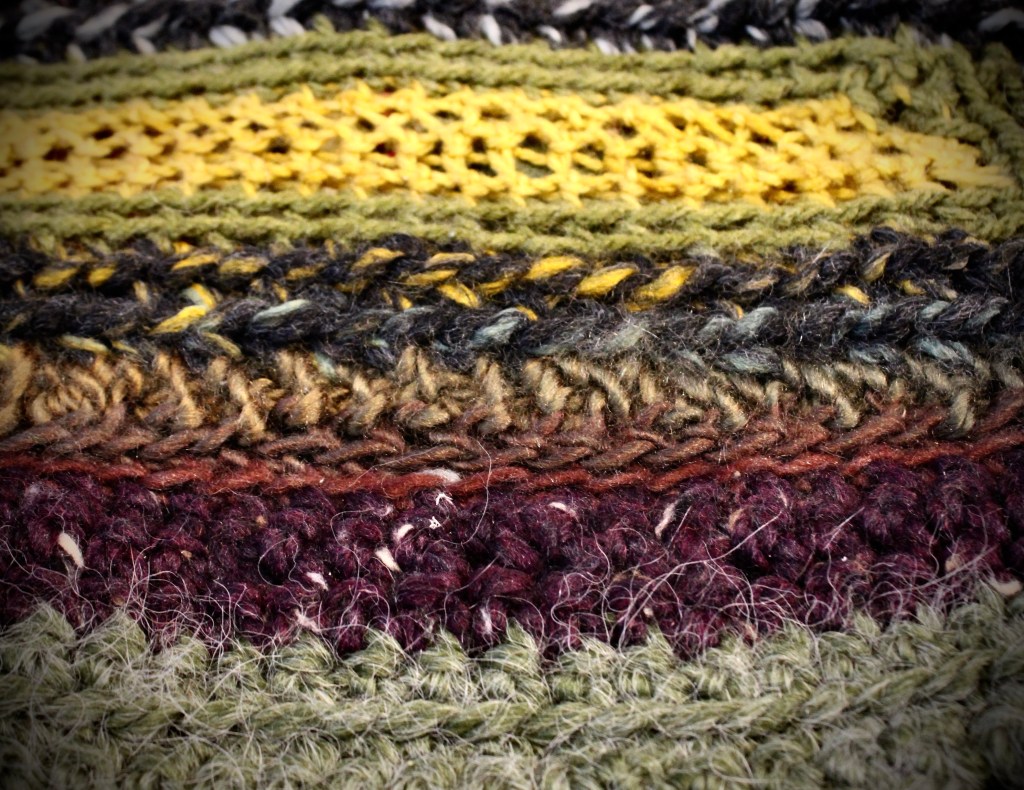
So, as an artist, I aspire to the nobility of the worm. I aspire to the vulture’s path. I serve all my communities by learning to eat… shit. And with that, spin wildly uneven yarn that we can use together to crochet new life, healthy connections, and webs of resilient communities.
And it’s no accident that I choose crochet, for my final metaphor, dear listener. Because knitting is the foundation of the entire digital age. And crochet? To this day, crochet cannot be done by a machine. It can only be done by hand. By human hands. Slowly, laboriously, with love.
And so, kind listener, I invite you to stumble along with me as I, the quintessential awkward duck, waddle along the riverbanks toward reconnection to the animate holiness of vultures and crochet.



 Ducks of the World Tree